
INDIBA Tecar Therapy
Introduction
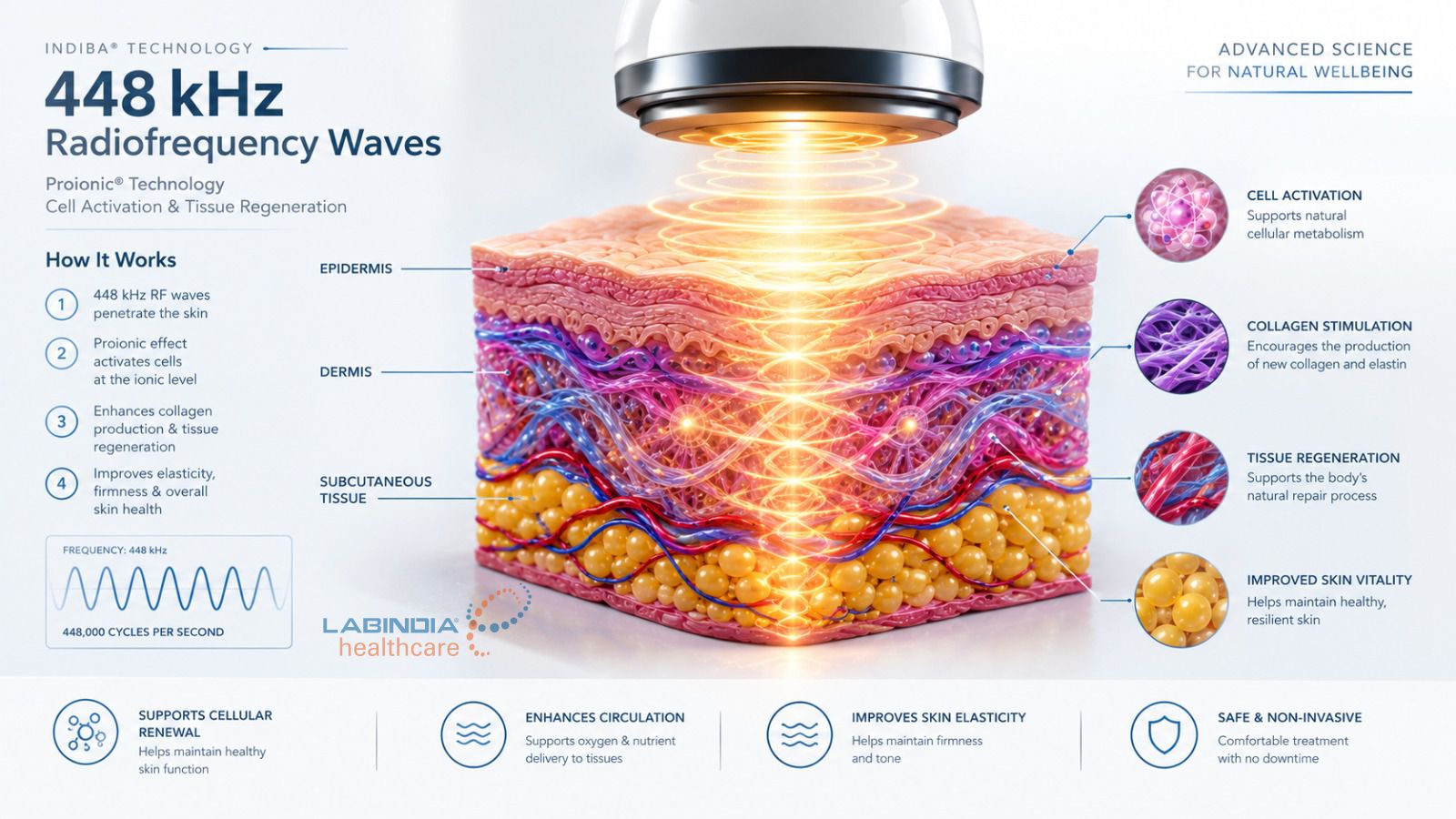
INDIBA Tecar Therapy has emerged as one of the most advanced physiotherapy technologies in modern rehabilitation. Using a precise 448 kHz radiofrequency, it stimulates tissue repair, reduces inflammation, and restores natural cellular function—offering faster recovery and long-lasting results for patients across musculoskeletal, sports, aesthetic, and post-surgical care.
This blog breaks down how INDIBA Tecar Therapy works, why it’s different, and how clinics can integrate it effectively.
Table of Contents
- What Is INDIBA Tecar Therapy?
- How 448 kHz Radiofrequency Works
- Modes of Application: CAP vs RES
- Biological Effects: Biostimulation, Vascularization & Hyperactivation
- Key Benefits for Patients
- Why Clinics Should Adopt INDIBA
- Device Options: Compact Lite, Plus & Pro
- Conditions Treated
- Conclusion
- Call to Action
1. What Is INDIBA Tecar Therapy?
INDIBA Tecar Therapy is a non-invasive treatment that uses radiofrequency energy to stimulate tissue regeneration, reduce pain, and accelerate healing.
- TECAR stands for Transfer of Energy Capacitive and Resistive.
- INDIBA operates at a fixed 448 kHz frequency, scientifically validated for optimal cellular response.
2. How 448 kHz Radiofrequency Works
INDIBA’s 448 kHz current enters the tissue and triggers cellular ion exchange, restoring physiological function in damaged cells.
This process—called the Proionic® effect—leads to:
- Faster tissue repair
- Improved blood flow
- Pain modulation
- Stem cell proliferation
3. Modes of Application: CAP vs RES
INDIBA uses two electrode modes:
- CAP (Capacitive): Targets superficial, well-perfused tissues like muscles and fascia.
- RES (Resistive): Penetrates deeper tissues such as tendons, ligaments, joints, and bone.
The COMPACT Pro device also offers DUAL RES, enabling bilateral treatment and reducing session time.
4. Biological Effects
INDIBA produces three distinct therapeutic effects depending on intensity:
Biostimulation (Sub-thermal)
- No heat
- Ideal for acute injuries
- Stimulates cell repair and proliferation
Vascularization (Mild Thermal)
- Increases deep blood flow by up to 79%
- Reduces inflammation and muscle spasm
Hyperactivation (Deep Thermal)
- Reorganizes fibrotic tissue
- Used for chronic pain, scar tissue, and post-surgical recovery
5. Key Benefits for Patients
INDIBA Tecar Therapy offers:
- Pain relief through improved circulation and endorphin release
- Accelerated healing for acute and chronic injuries
- Improved mobility and tissue flexibility
- Non-invasive, drug-free treatment with no downtime
- Immediate and long-lasting results, often visible from the first session
6. Why Clinics Should Adopt INDIBA
Clinics benefit from:
- Complementary integration with manual therapy, exercise rehab, dry needling, and more
- Higher patient satisfaction due to comfortable treatments
- Faster recovery times, improving clinic efficiency
- New revenue streams through advanced therapeutic packages
- Competitive differentiation with cutting-edge technology
7. Device Options
INDIBA offers three main devices by Labindia:
- Compact Lite: Portable, ideal for mobile practitioners
- Compact Plus: Smart handle with real-time temperature feedback
- Compact Pro: Premium device with DUAL RES mode for advanced clinics
8. Conditions Treated
INDIBA is effective for:
- Knee osteoarthritis
- Spine disorders
- Tendon injuries
- Sprains, fractures, contusions
- Post-surgical rehabilitation
- Chronic pain conditions
Conclusion
INDIBA Tecar Therapy is more than a treatment—it’s a scientifically validated system that enhances natural healing, accelerates recovery, and improves patient outcomes across all phases of rehabilitation. With its 448 kHz frequency, dual modes, and deep biological effects, INDIBA stands as a global leader in TECAR technology.
Call to Action
Want to integrate INDIBA Tecar Therapy into your clinic or learn how it can transform your rehabilitation outcomes?
Reach out today to explore device options, training, and clinical integration strategies.


